 I’ve recently been talking quite a lot on the blog about God’s kingdom (mainly as part of my ongoing survey of Tom Wright’s Simply Jesus). Well, over lunch today I listened to a sermon by Brian Zahnd in which he said a couple of things that fit right into this theme.
The sermon in question is titled “The healing of harms” (you can listen to the whole thing here). I don’t want to go into everything it covered; I just want to pull out a couple of specific points that I think are really helpful in understanding the kingdom.
There are a couple of reasons we tend to have difficulty grasping just what the kingdom of God is. One is the erroneous teaching that the kingdom is something we enter into one day in the far-distant future. This widespread misunderstanding of the kingdom arises from a faulty view of the gospel and a defective eschatology.
Our second major difficulty with the kingdom is that we live in modern western democracies that are very far removed from the concept of what a kingdom is. As a result, we have no frame of reference to help us understand what kind of animal the kingdom of God is.
This is where Brian helps us out. You may have often heard the kingdom of God described as the rule or the reign of God. Using those words gives us the beginnings of a better understanding. But Brian goes further, first by referring to the kingdom of God as the politics of God and then by describing it as follows:
the new arrangement of human culture and society under God
I find this a really helpful way of thinking about the kingdom. Of course, it begs the question of how such a new arrangement comes about – which is entirely the point. Jesus defeated the old fear- and competition-driven arrangement (aka the kingdom of this world) through his words, his deeds, and ultimately his death and resurrection. He demonstrated what living under God’s new arrangement looks like. And then, following his ascension, he freely poured out us his Spirit to help us actually live under that kind of arrangement.
Brian then goes on to flesh out this idea and bring it to life by talking specifically about wealth and the kingdom:
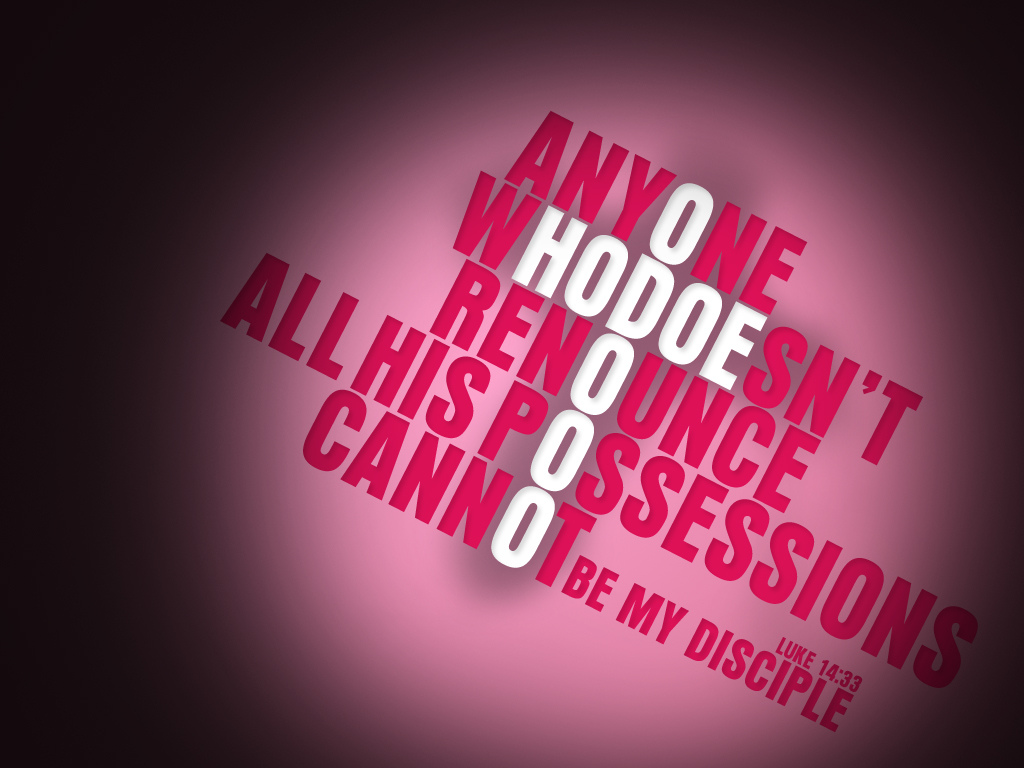
It’s easier for a camel to squeeze through the eye of a sewing needle than it is for the very wealthy to enter into God’s new arrangement of human society, the kingdom of God. Because economic self-interest is the greatest hindrance.
Again, I find this really helpful.
When we think about Jesus’ tricky comment about camels, eyes of needles and rich people, we generally scratch our heads and wonder what on earth he could have meant. And because we tend to equate “entering the kingdom of God” with “going to heaven after you die”, we assume Jesus is somehow describing a precondition for salvation. If you have lots of money, it will be hard for you to get saved.
The obvious problem with such an interpretation is (i) why should money make it hard to go to heaven?, and (ii) how much money is too much anyway?
What Brian does here is show us how we need to think of the kingdom in a completely different way. If the kingdom is not simply about where we go after we die but the kind of arrangement under which we choose to live now, Jesus’ cryptic comment about wealth makes much more sense. Why? Because the accumulation of wealth encourages economic self-interest. The more you have, the more you want, and the more you want to protect what you already have. And there comes a point where trying to protect and grow your own assets is not compatible with living the new kind of life Jesus inaugurated.
To put it another way, life in the kingdom is other-centred and free of fear. Conversely, the accumulation and protection of great wealth usually requires us to be increasingly self-centred and fearful of what might become of us if we somehow lose that financial safety net we’ve worked so hard to build up. At some point, the two are incompatible.
Am I saying you can’t be rich and live under God’s new arrangement of human culture and society? No. Jesus didn’t say it was impossible, and neither am I saying that. What Jesus said was that it’s very difficult. The more wealth you have, the greater the effort it’s going to require for you to live according to God’s new arrangement.
Thanks, Brian, for joining with Tom Wright and others in helping me see more clearly just what this mysterious kingdom of God is all about.
[ Image: Stephen Cuyos ]
