
Faith Meets World

Reflections on faith in a messed-up but beautiful world

Category: Gospel (Page 4 of 4)

Wisdom from a faithful pastor

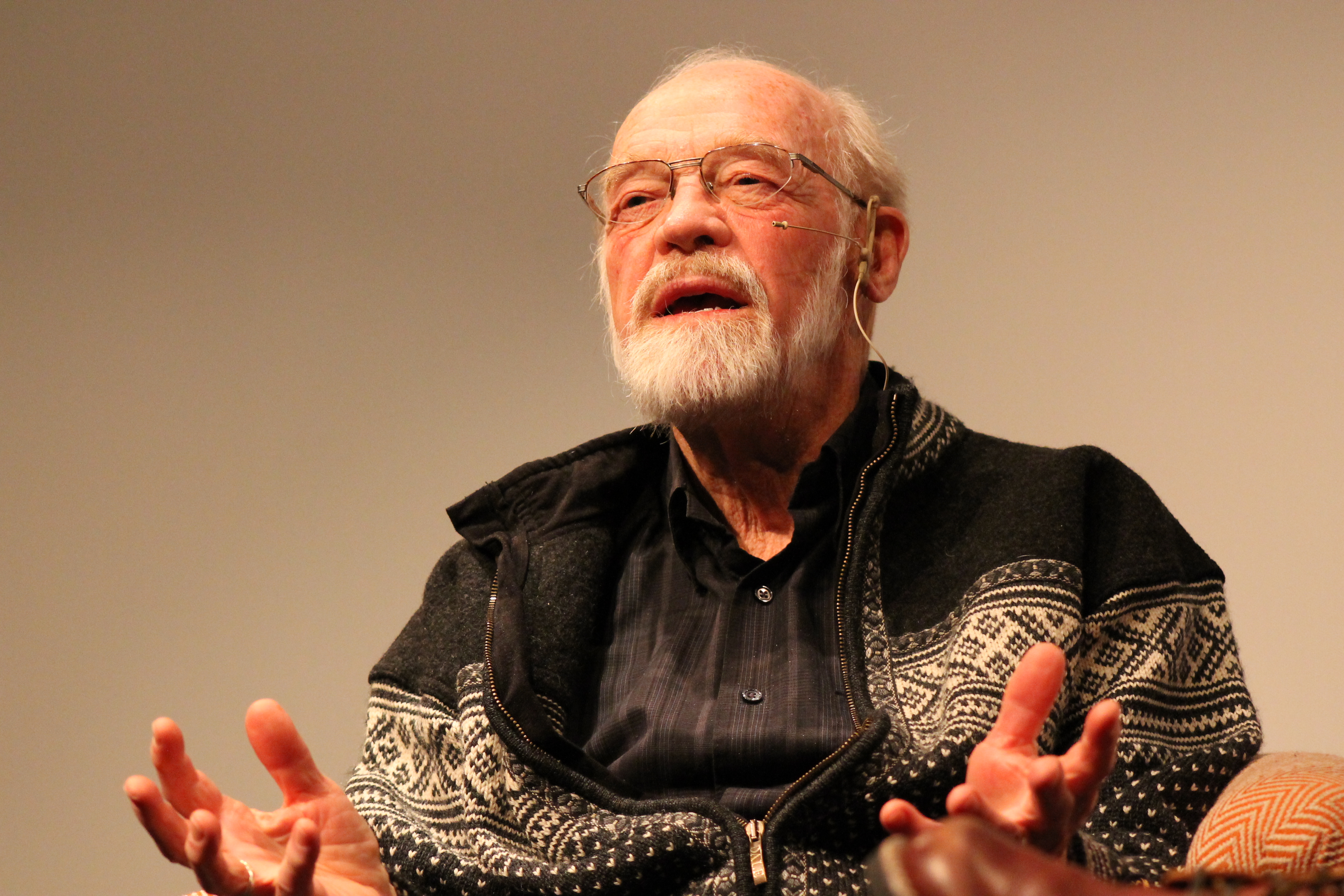
Eugene PSometimes you come across something on the interwebs that’s just too good not to share. This interview with Eugene Peterson, famed for his The Message contemporary translation of the Bible, is one such thing. Here is wisdom from a man who has walked the walk.

The one thing I think is at the root of a lot of pastors’ restlessness and dissatisfaction is impatience. They think if they get the right system, the right programs, the right place, the right location, the right demographics, it’ll be a snap. And for some people it is: if you’re a good actor, if you have a big smile, if you are an extrovert. In some ways, a religious crowd is the easiest crowd to gather in the world. […] This consumer culture, people grow up determining what they want to do by what they can consume. And the Christian gospel is just quite the opposite of that. And people don’t know that. And pastors don’t know that when they start out. We’ve got a whole culture that is programmed to please people, telling them what they want.  And if you do that, you might end up with a big church, but you won’t be a pastor [emphasis added].

Go and read the whole interview, and be inspired and blessed.

The great grace debate

There are few Christians who would not claim to be saved by grace. We usually use this word “grace” to mean God’s incredible graciousness in saving us in spite of our utter sinfulness and unworthiness. (Whether that is, in fact, the best definition of grace is a question for a future post; in any event, it will suit our purposes for now.) But there appears to be increasing controversy over just how far Christians should push the envelope when it comes to grace.

In an interview promoting his new book One Way Love: Inexhaustible Grace for an Exhausted World, Florida pastor Tullian Tchividjian (try pronouncing that with a mouth full of marshmallows), who also happens to be the grandson of legendary evangelist Billy Graham, sketches the problem:

There’s no question that for far too long the church has been primarily concerned with external change. Preachers are afraid of grace because they think it undercuts obedience and encourages apathy. If Jesus paid it all and it is finished, if the judgment against us has been fully and finally taken care of, aren’t we opening the door to lawlessness? This is what Judaizers were afraid of: they didn’t like Gospel of free grace because they thought people would get out of control. If God is not mad at me and if he will never love me more than he does right now, then why can’t I party my way through life? The underlying fear is that unconditional grace leads to licentiousness.

Read More

God wants you rich!

As I said in a recent post, there is much truth in the adage that money makes the world go round. There’s nothing wrong with money in and of itself: it’s a means to an end, something we use to assign value and to trade what we have for what we need.

But make no mistake: money also has the potential to ensnare us. Paul warned his young mentee Timothy that “the love of money is the root of all kinds of evil” (1 Timothy 6:10). Why is money such a potent force for evil? Simply put, money is an enabler for the self: if we have money, we can obtain or experience what we enjoy and desire. The consumer-driven society in which we live encourages us to use money in that very way: to have more things, newer things, shinier things, more exciting experiences, a higher status. The bottom line is this: to love money is to love ourselves.

Read More

The gospel isn’t for sale

Money makes the world go round. We’ve heard this so often it’s become a cliché. In fact, there’s a lot of truth in it.

We live in a world that is predicated on buying and selling. We sell our services to an employer to get money to buy the food, clothing and shelter we need. Children enter the picture, and suddenly we need to buy more food, more clothes, and goodness knows what else. Thus has it ever been.

Modern consumer capitalism has taken this basic cycle and extrapolated it to an extreme degree. Just having enough for our own needs and those of our family is no longer enough. We begin to enjoy fancier food or decide we’d like to sport the latest fashions, so we have to earn more money to pay for it. Our perfectly serviceable car no longer looks as sleek and shiny as it once did, so we take out a bank loan to buy a new one, thus putting even more pressure on our pay packet. And, of course, we need the latest mobile phone, tablet, mp3 player, cable TV package… the list goes on. It’s no longer just about meeting our needs; it’s about establishing our identity and making a statement through how we dress, what we eat, what music we listen to on what device, even what brand of sunglasses we wear.

Multinational corporations understand this cycle of desire and fulfilment all too well. We’re surrounded by radio, TV, online, press and billboard ads all clamouring for our attention from the moment we wake up until we lay down our heads to sleep. And they’re all telling us essentially the same story: buy this product and you (or your family) will look and/or feel happier, thinner, sexier, cooler, healthier, cleverer, richer, calmer, stronger, more popular, more beautiful, and so on. Some companies even go so far as to conceive of marketing strategies that cunningly create and plant in our subconscious minds desires we didn’t even know we had, so that they can then fulfil those desires with their latest “must-have” product. Apple is perhaps the company that has used this strategy to most spectacular effect, more than once propelling it to the top of the list of the world’s most valuable companies, but it is far from the only company to spend an awful lot of money working out how to convince us what we really need.

Read More

On being saved

I’ve been a follower of Jesus long enough to know that it’s easy to lose sight of what it actually means to be a Christian.

When I was a kid and before I ever really went to church (apart from the odd wedding, Christening or other special occasion), I thought being a Christian just meant you believed in God and believed in Jesus. Of course, “believing in God” just meant believing that there was some kind of vaguely benevolent life force out there, and “believing in Jesus” meant believing that Jesus lived, told parables and did some pretty cool miracles before a bunch of bad guys caught up with him and nailed him to a cross. Oh, and he may have risen from the dead and then floated up to heaven to be with God. And the robe that was wrapped around him in the tomb was maybe in a museum somewhere in Italy.

I guess I also believed for at least part of my childhood that I was a Christian simply because I lived in Britain, and as everyone knew, Britain was a Christian country. I think I would probably also have said, if pushed, that Christians were expected to go to church from time to time, to offer up the odd prayer (“Please could you arrange it so I get a new bike for Christmas!”) and to be nice.

Read More

Page 4 of 4

All content on this site is copyright © Rob Grayson 2013-2021 unless otherwise indicated