
Faith Meets World

Reflections on faith in a messed-up but beautiful world

Category: Culture (Page 3 of 4)

Some musings on Nelson Mandela

MandelaYesterday evening (as if anyone could not already know this), the world learned of the death of South African political-activist-turned-president Nelson Mandela, who passed away aged 95 after a long struggle with a lung infection.

Predictably – and, I might add, justifiably given his stature – the internet and social media have been alive with news and comment about Mandela’s life and legacy today. There’s probably little of substance that I can add to what’s already been said, but I thought it would be appropriate to offer a few thoughts of my own.

I first heard Mandela’s name on the radio when I was a teenager in the 1980s; for a long time, I had little idea who he was, what he stood for or why he was such an important figure. It was only really after the fall of the apartheid regime and the establishment of South Africa’s Truth and Reconciliation Commission that I began to understand his significance. However, while few would deny the crucial role he played in engineering a peaceful transition to an inclusive democracy, there always remained questions over his past affiliations, and in particular his involvement in a militant group known as MK, which led a sabotage campaign against the apartheid government that resulted in significant numbers of civilian casualties. It was, of course, this association that landed him in prison in 1962; he would not emerge until 27 years later.

Broadly speaking, the reactions I’ve seen on social media to Mandela’s death range from one extreme to the other. While many have been content to commend his achievements, some seem to have accorded him almost godlike status, while others have harked back to his militant days and expressed their frustration at such accolades being heaped upon a “terrorist” and a “murderer”.
Read More

Joyful Friday

I first came across the video below a few months ago, but it popped up again in my Facebook feed this morning, so I thought I’d share it. The music is, of course, Schiller’s Ode to Joy, as famously used in the finale of Beethoven’s resounding ninth symphony.

Setting aside the fact that it’s actually an advertisement for a bank, and that the recording has clearly been overdubbed in the studio, it’s a great illustration of the power of music to unite and inspire people of all ages and backgrounds. Listening to this, and watching how people react to it, stirs something deep and inexpressible in my soul. I believe the reason music (and art) has such deep resonance and power is that it calls to something of the DNA of God within each of us – something that is beautiful and true, because it was put in us by the One who is Beauty and Truth.

Enjoy.

(On a related theme, you may also like my earlier post, Finding God at a rock concert.)

Some Christian responses to Halloween

Today is Halloween, or, to give it its more correct name, All Hallows’ Eve.

Christians differ in their views on Halloween – and, more specifically, whether it’s right or appropriate for Christians to let their kids engage in Halloween-related activities such as Halloween parties or trick-or-treating. Rather than present an in-depth examination of the question (something I would find difficult, mainly because this is an issue on which I’m on the fence), I’ll share some excerpts from recent posts – one against Halloween, one in favour, and one that comes at the whole issue from a different angle altogether.

Read More

Finding God at a rock concert

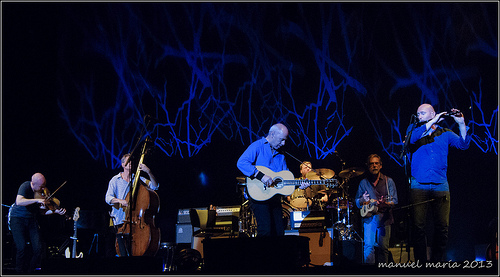
Photo credit: Manuel María De Miguel Alonso de Medina

Earlier this year, my wife and I went to see one my favourite musicians, guitarist extraordinaire and singer-songwriter Mark Knopfler, in concert at the LG Arena, a large indoor venue near Birmingham. (You can read my review of his most recent album Privateering here.) It was the second time I’d seen Knopfler live, the first time being some ten years earlier at the same venue.

There was no support act, so once we’d been our seats half an hour or so, an announcer came on and introduced Knopfler and his band.

Now, I’ve been to gigs before where the band and the material were good but the sound was poor, or where the performers just didn’t seem quite on form, or where it was difficult to see. But this time, everything was just right: our seats were in a pretty good position, up high to once side of the stage with a commanding view of the whole band; the sound was excellent; and here we were to watch and listen to one of the world’s great guitarists. The atmosphere was charged with anticipation, and from the very first note that was played, I knew this was going to something special.

Read More

Continous partial attention

Canadian pastor-blogger Darryl Dash has a post up about “continuous partial attention”, which he defines as follows:

We’re never completely tuning in to one thing because of the other stimuli competing for our attention.

  • It’s checking in on Facebook while the professor lectures.
  • It’s pulling out the smartphone while on a date with your wife.
  • It’s tweeting in the middle of a sermon.
  • It’s missing out on what’s here because we’re wondering what’s going on somewhere else that we’re missing.
  • It’s never being able to pray because we’re too distracted.

What’s lost is the ability to pay attention, to sustain thought, to be fully present. And that’s a shame when it comes to our most important relationships, not to mention our ability to think and pray.

In his post, Darryl wonders whether this could be one of the greatest pastoral issues we’re facing today. I think he could be right. This obsession with constant social media connection encourages us to lead fragmented lives where we are never fully present in the moment. I fear, in particular, for today’s young people, many of whom appear not to know how to disengage from the noise and chatter of the virtual world. This will surely take its toll in their future real-world relationships. Meanwhile, many parents sit idly by, and some even give their kids smartphones as early as five years old. This is madness.

(I blogged about this in an earlier post, More connected but further apart than ever.)

Finding meaning

Our suffering in developed countries is primarily psychological, relational, and addictive: the suffering of people who are comfortable on the outside but oppressed and empty within. It is a crisis of meaninglessness, which leads us to try to find meaning in possessions, perks, prestige, and power, which are always outside of the self. It doesn’t finally work. So we turn to ingesting food, drink, or drugs, and we become addictive consumers to fill the empty hole within us.

— Richard Rohr

Makes sense to me. The consumer society appeals to our deepest yearnings by claiming to be able to fulfil our desire for meaning and worth. But its promise is empty: the more we try to find fulfilment in material possessions and experiences, the more empty we are left feeling.

Wisdom from a faithful pastor

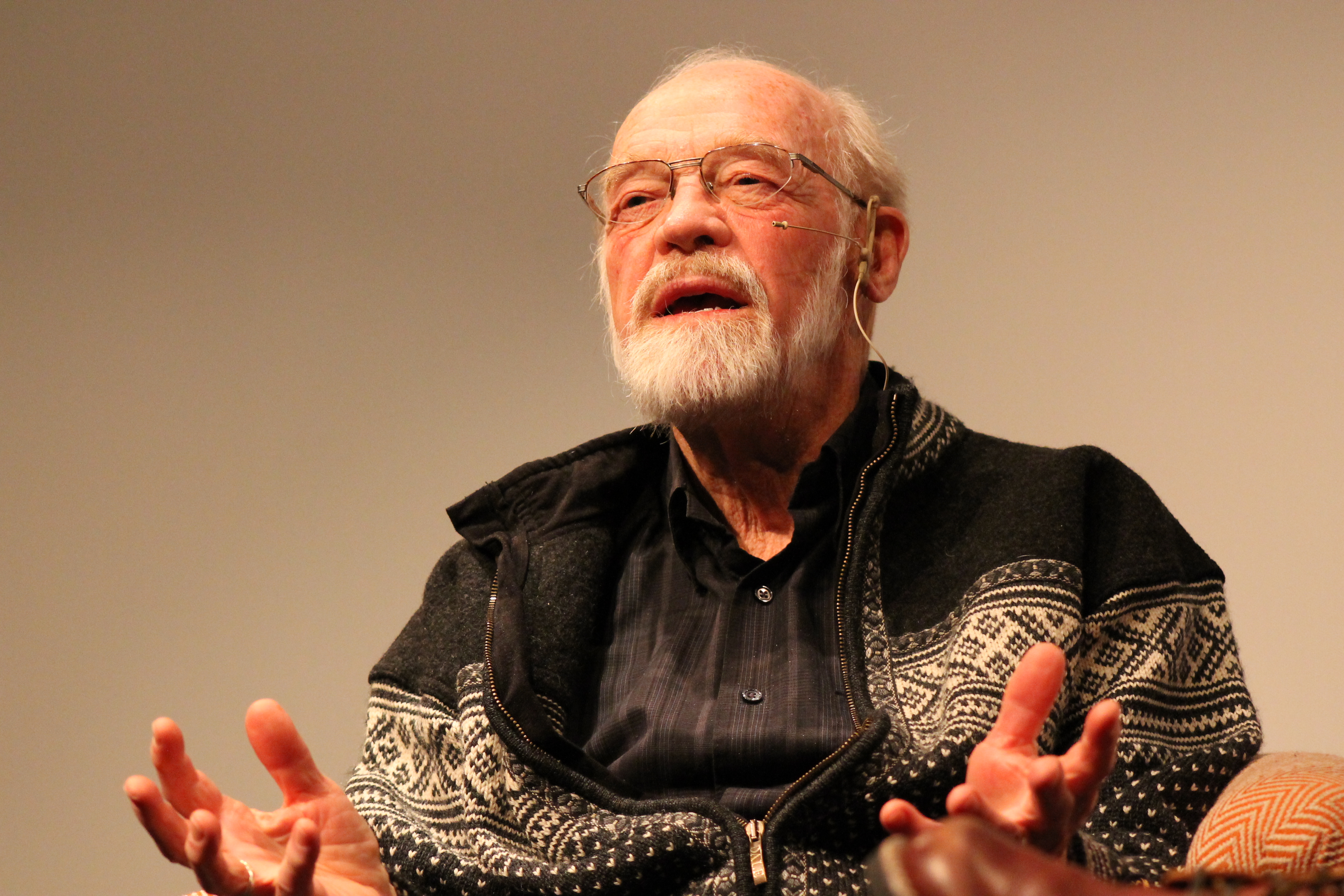
Eugene PSometimes you come across something on the interwebs that’s just too good not to share. This interview with Eugene Peterson, famed for his The Message contemporary translation of the Bible, is one such thing. Here is wisdom from a man who has walked the walk.

The one thing I think is at the root of a lot of pastors’ restlessness and dissatisfaction is impatience. They think if they get the right system, the right programs, the right place, the right location, the right demographics, it’ll be a snap. And for some people it is: if you’re a good actor, if you have a big smile, if you are an extrovert. In some ways, a religious crowd is the easiest crowd to gather in the world. […] This consumer culture, people grow up determining what they want to do by what they can consume. And the Christian gospel is just quite the opposite of that. And people don’t know that. And pastors don’t know that when they start out. We’ve got a whole culture that is programmed to please people, telling them what they want.  And if you do that, you might end up with a big church, but you won’t be a pastor [emphasis added].

Go and read the whole interview, and be inspired and blessed.

Page 3 of 4

All content on this site is copyright © Rob Grayson 2013-2021 unless otherwise indicated